Best Carry On Packing Tips For Efficient, Stress-Free Travel
You’ll travel lighter and stress less when you pack your carry-on with intention and a simple plan. Prioritise versatile clothing, essential documents, and travel-sized toiletries so everything you need fits within airline limits and stays accessible.
They will outline practical packing strategies that protect valuables, save space, and speed up security lines. Expect proven space-saving methods and a short checklist of must-have items that prevent last-minute scrambles.
Fundamental Carry-On Packing Strategies
They should choose the right carry-on luggage, plan a concise packing list, and use packing cubes and compression to save space and stay organised. Focus on dimensions, weight limits, essential items, and techniques that maximise usable volume without exceeding airline rules.
Selecting the Best Carry-On Luggage
They should pick a carry-on bag that fits the airline’s size limits and weighs less than competitors’ to allow more packed items. Hard-shell carry-on suitcases protect fragile items and resist compression, while soft-sided carry-on luggage often expands and offers external pockets for quick access to travel documents.
Wheeled carry-on suitcases with 4 spinner wheels make terminal navigation easier; two-wheel designs roll better on uneven surfaces. Choose a carry-on suitcase with an internal compression strap and divider to keep clothes flat and organised. For carry-on only itineraries, a durable personal item bag (e.g., a slim backpack or tote) helps separate electronics and on-flight essentials.
Look for TSA-approved locks, ID windows, and water-resistant fabrics. If flying multiple airlines, select a bag under the smallest common dimension (usually 22 x 14 x 9 in / 56 x 36 x 23 cm). They should test packing at home to ensure the carry-on closes without forcing zippers.
Essential Packing List Preparation
They should build a packing list that prioritises wearable items, toiletries, and electronics in that order. Start with a capsule wardrobe of neutral, multi-use pieces: 2-3 tops, 1-2 bottoms, a lightweight layer, and one versatile pair of shoes to minimise bulk while covering different activities.
Group toiletries into travel-size containers in a clear quart-sized bag and put liquids in the personal item bag if gate-checking risks exist. Pack chargers, a power bank, headphones, and travel adapters in a small electronics pouch for quick access at security. Include a compact first-aid kit, travel documents, and a pen for customs forms.
They should weigh the packed carry-on before leaving home to avoid checked-bag fees. Use a checklist app or printed list and tick items as they pack to prevent last-minute overpacking or forgotten essentials.
Smart Packing with Packing Cubes and Compression Techniques
They should use packing cubes to separate outfits, underwear, and accessories, making it fast to find items without unpacking the entire carry-on bag. Place frequently used items like a spare shirt and toiletries in an outer cube or the personal item bag for easy retrieval during travel.
Compression packing cubes reduce volume by flattening clothes, especially cotton and synthetic blends; reserve them for bulkier items like sweaters and jeans. Roll lighter garments to save space, stack shirts flat in a cube for wrinkle-sensitive fabrics, and use shoe bags to keep dirt away from clothes.
Use a small checklist for cube placement: top cube—day 1 outfit and toiletries; middle cube—rest of clothes; bottom—shoes and laundry bag. Keep fragile items cushioned between clothing layers and place electronics near the carry-on’s centre for protection and weight balance.
Space-Saving Packing Methods and Essential Items
This section lists specific ways to reduce bulk, organise small items, and prioritise essentials so that carry-on space stretches further. It emphasises clothing choices, compact toiletry setups that follow the 3-1-1 liquids rule, and practical packing hacks that fit an airport outfit plus a change of clothes.
Maximising Clothing Versatility and Rolling Techniques
They choose a small capsule of versatile clothing: one neutral blazer or lightweight jacket, two tops that mix and match, one pair of pants that dresses up or down, and a set of underwear and socks per travel day. Fabrics like merino wool and wrinkle-resistant blends cut odour and ironing needs, letting travellers pack fewer pieces.
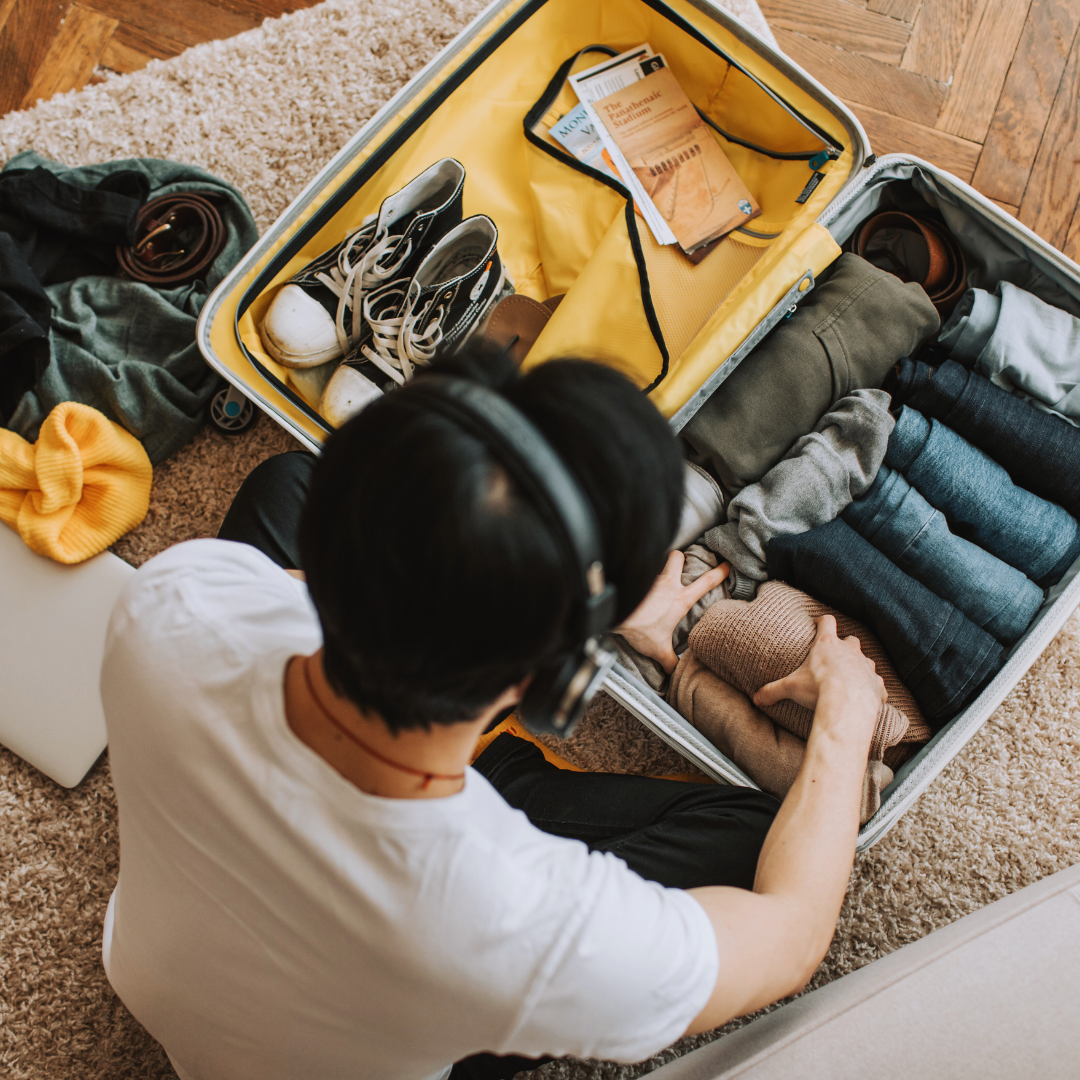
Rolling clothes tightly reduces creasing and creates compact cylinders that fit into corners better than folded stacks. Roll shirts, underwear, and lightweight pants; use a thin packing cube for rolled items to compress and separate outfits. Place the airport outfit (layered jacket, scarf, and shoes worn) on top to save liner space and avoid overheating the bag.
They use outfits that multitask: a dress that doubles as a day outfit and evening option, shoes that work for walking and a casual dinner, and a scarf that becomes a neck pillow substitute. Reserve one packing cube for “dirty” items to keep clean clothes accessible. Glasses case and travel pillow go in external pockets for quick access.
Efficiently Packing Toiletries and Tech Essentials
They follow the 3-1-1 liquids rule: each liquid in a 3.4 oz (100 mL) bottle is placed inside a single 1-quart clear bag. Consolidate shampoo, body wash, and conditioner with travel-size bottles or swap to solid options like shampoo bars to remove liquid limits and free space.
Use a structured toiletry bag or hanging toiletry bag so bottles stay upright and accessible at the hotel. Keep a small Dopp kit for razor, toothbrush, and floss; put prescription meds and contact solution in an easy-to-reach pocket. For tech, carry a compact charger, one multiport cable, and a thin power bank under 100Wh. Stow earbuds, glasses case, and a slim travel pillow near the top so security or in-flight comfort requires no bag excavation.
They protect fragile chargers in a padded pocket and label cables with a colour dot. Place essential toiletries and tech in the middle layer of the carry-on to balance weight and keep items from squashing clothes.
Carry-On Packing Hacks and Final Checklist
Use packing cubes sized to function: one large for bulk clothes, one medium for tops and pants, and one small for underwear and socks. Compressible cubes and vacuum-style compression bags work for longer trips, but avoid overfilling to prevent zipper strain. Keep a spare foldable tote or nylon daypack for purchases or laundry separation.
Include a short checklist in a front pocket: passport, boarding pass, wallet, phone, headphones, charger, power bank, travel-size toiletries, spare underwear, and a change of shirt. Add a small zip pouch for coins, receipts, and hotel key cards to avoid losing them in the main compartment.
Employ these practical hacks: tuck belts around shoe interiors, stuff socks inside shoes, and place heavier items close to the wheels for better suitcase balance. If liquid limits are tight, swap to solid deodorant and face cleanser. Pack one outfit in a clear plastic bag for easy security inspection and keep the 3-1-1 quart bag accessible to speed through checkpoints.


You May Also Like
Top 10 Countries To Visit On A Solo Trip

Weekend Getaway Destinations for Couples